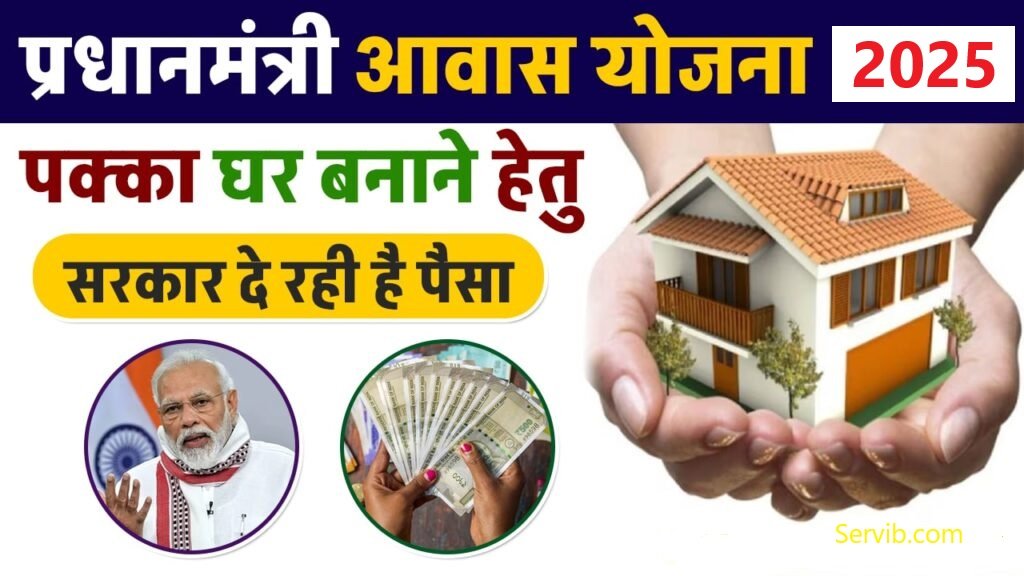
Pradhan Mantri Awas Yojana (PMAY) is a flagship housing scheme launched by the Government of India in 2015 with the ambitious goal of providing affordable pucca houses to all eligible citizens by 2022. This initiative aims to address the housing shortage among the economically weaker sections (EWS), low-income groups (LIG), and middle-income groups (MIG) in both urban and rural areas. As of early 2025, PMAY has sanctioned over 3.34 crore houses and completed around 2.69 crore, making significant strides toward its target.
Components of PMAY
PMAY is broadly divided into two main components:
PMAY-Urban (PMAY-U): Focuses on providing affordable housing to eligible families in urban areas who do not own a pucca house. It targets slum dwellers and families in EWS, LIG, and MIG categories. Houses under this scheme come with basic amenities such as water supply, electricity, kitchen, and toilets.
PMAY-Gramin (PMAY-G): Aims to provide housing in rural areas to families living in kutcha houses or without any shelter. This component is administered by the Ministry of Rural Development.
Objectives and Benefits
The primary objective of PMAY is to ensure “Housing for All” by 2022, promoting social equity and improving living standards. The scheme offers several benefits:
Financial Assistance: Subsidies on home loan interest rates under the Credit Linked Subsidy Scheme (CLSS) help reduce the burden of EMIs for beneficiaries.
Employment Generation: The construction activities under PMAY generate employment opportunities, boosting the construction sector and allied industries.
Women Empowerment: Ownership of houses is encouraged in the name of female members or jointly with males, promoting gender equality.
Improved Quality of Life: Beneficiaries receive houses equipped with essential amenities, contributing to better health and hygiene.
Inclusive Development: Special provisions are made for differently abled and elderly persons, ensuring inclusive access to housing.
Eligibility Criteria
To avail benefits under PMAY, applicants must meet certain eligibility conditions:
The beneficiary family should not own a pucca house anywhere in India.
Income limits vary by category:
EWS: Annual income up to ₹3 lakh
LIG: Annual income up to ₹6 lakh
MIG-I: Annual income between ₹6 lakh and ₹12 lakh
MIG-II: Annual income between ₹12 lakh and ₹18 lakh
The applicant must be an Indian resident aged 18 years or above.
The applicant should not have availed any other government subsidy for housing.
Application Process
Applying for PMAY is straightforward and can be done online or offline:
Visit the official PMAY website or the respective state portals.
Select the relevant scheme component (Urban or Gramin).
Fill in personal details such as name, address, Aadhaar number, income details, and property information.
Upload necessary documents including Aadhaar card, ration card, bank passbook, income proof, and self-declaration stating no ownership of a pucca house.
Submit the application and track status online using the registration number.
Subsidy and Financial Assistance
Under the Credit Linked Subsidy Scheme (CLSS), beneficiaries receive an interest subsidy on home loans as follows:
6.5% for EWS and LIG categories
4% for MIG-I
3% for MIG-II
The subsidy reduces the principal amount payable, thereby lowering EMIs. The maximum subsidy amount can be up to ₹2.67 lakh, making home ownership affordable for many.
Implementation Phases
PMAY is implemented in phases:
Phase 1 (2015-2019): Initial rollout focusing on urban and rural housing.
Phase 2 (2019-2024): Expansion and consolidation of housing projects.
Phase 3 (2024-2030): Future plans to cover remaining eligible beneficiaries and enhance infrastructure5.
Frequently Asked Questions (FAQs) on Pradhan Mantri Awas Yojana
Q1: Who is eligible for PMAY?
A1: Indian citizens aged 18 or above who do not own a pucca house, belonging to EWS, LIG, or MIG categories based on income criteria, are eligible to apply.
Q2: What types of houses are provided under PMAY?
A2: PMAY provides pucca houses with basic amenities like water supply, electricity, kitchen, and toilets. The houses are eco-friendly and constructed using modern technology.
Q3: How can I apply for PMAY?
A3: Applications can be submitted online via the official PMAY portals or offline through designated government offices by submitting required documents
Q4: What documents are required to apply?
A4: Essential documents include Aadhaar card, ration card, income proof, bank passbook, self-declaration of no house ownership, and employer’s letter if applicable
Q5: Is there any subsidy on home loans under PMAY?
A5: Yes, under the CLSS, eligible beneficiaries receive an interest subsidy on home loans ranging from 3% to 6.5%, depending on their income group
Q6: Can women apply for PMAY independently?
A6: Yes, PMAY encourages ownership in the name of female members or jointly with males to promote women empowerment
Q7: Are slum dwellers covered under PMAY?
A7: Yes, slum dwellers are given preference under PMAY-Urban for in-situ slum redevelopment and affordable housing
Q8: What is the tenure of the loan under PMAY?
A8: The subsidy is applicable for home loans taken for a tenure of up to 20 years
Q9: Can PMAY be availed for home renovation?
A9: Home renovation or improvement loans with subsidy are available only for EWS and LIG categories
Q10: How to check the status of my PMAY application?
A10: Applicants can check their application status online by entering their registration number and captcha code on the official PMAY website